
Dog Walking Safety Tips - How to Handle Off-Leash Dogs
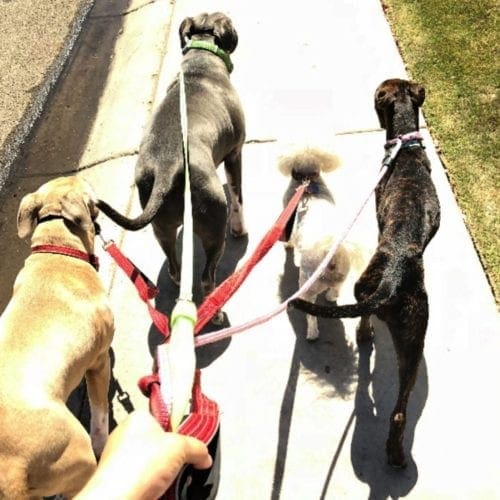
Whether you’re a professional dog walker or a dog owner enjoying a neighborhood walk, unexpected encounters with off-leash dogs can be stressful and even dangerous. As a positive reinforcement dog trainer in Glendale, AZ, I’ve learned that preparation, awareness, and some key tools are your best defenses when it comes to keeping both you and your dog safe.
Safety Tip #1: Stay Alert and Aware
Being bum-rushed by an off-leash dog is bound to happen at some point if you walk dogs regularly. The key is to stay alert! Keep your head on a swivel, eyes scanning, and ears open. Avoid distractions like scrolling on your phone or wearing headphones. Awareness provides crucial seconds to strategize and prepare.
If you see an off-leash dog from a distance, try to stay calm and avoid drawing attention to yourself or the dog you’re walking. Quietly turn and walk the other direction, or use parked cars, trees, landscaping, or fences as visual barriers. Another great tactic is to feed treats to your dog to keep them focused on you and less likely to bark or react.
Safety Tip #2: Get the Owner’s Or Other People's Attention
If walking away isn’t an option, call out firmly:
“CALL YOUR DOG!”
This phrase often alerts the owner or nearby neighbors before things escalate. Remember, most of these dogs aren’t human-aggressive; however, they’re far more likely to be dog-reactive or territorial with other dogs.
⚠️ Never pick up and hold your dog when another dog is charging. This can make you the target of redirected aggression.
Safety Tip #3: Practice Preparedness
The best protection is scenario planning.
As part of your dog walking safety, get in the habit of thinking through “what-if” situations in the neighborhoods or areas you frequently walk. Identify:
- Areas with off-leash dogs, broken fences, or frequently open garages
- Safe zones (porches, cars, landscaping, or elevated surfaces)
- Helpful neighbors or businesses nearby
When you’ve already rehearsed what to do, you’re less likely to panic, and that time is critical in your preparation which will make all of the difference.
Safety Tip #4: Stand Tall and Take Control
If an off-leash dog continues to approach:
- Place your dog behind you to act as a shield.
- Stand tall, spread your arms wide, and look as large and confident as possible.
- Use firm verbal commands like “NO,” “STOP,” or “SIT.” Most dogs recognize these words.
- Stomp your foot forward once to reinforce your message.
Many dogs will hesitate or stop when faced with a confident, assertive and large stance.
Safety Tip #5: Helpful Tools to Carry on Every Walk
As a professional dog trainer, there are a few tools I never walk without. These can buy you valuable seconds or prevent an encounter from escalating.
- High-value treats — Toss handfuls toward the oncoming dog. This can distract curious but non-aggressive dogs.
- Use your surroundings — Create distance with parked cars, fences, landscaping, or garbage cans. If necessary, lift your small dog onto a safe surface (like a car hood or even inside a trash bin), not into your arms.
- Pet Corrector spray — A burst of compressed air makes a loud hiss that most dogs will back away from.
- Spray Shield — A non-toxic citronella deterrent that creates an invisible scent barrier.
- Pepper Gel (MACE) — Use gel, not spray, so it doesn’t blow back at you. Aim for the dog’s face only if absolutely necessary.
- Extra leash or belt — Useful for control or, in extreme emergencies, to release a latched bite.
If a dog latches onto yours:
Use a leash, belt, or shoelace to loop around the aggressor’s neck and pull upward firmly. This cuts airflow temporarily, forcing the dog to release while giving you control to prevent re-attack.
Biggest Dog Walking Safety Tip is To Be Proactive, Not Reactive
Every dog walker and pet parent should be equipped, both mentally and physically, to handle an off-leash encounter.
I offer Walking Safety Sessions that teach you how to read canine body language, defuse reactive behavior, and stay calm under pressure. Learning these techniques before you’re in crisis mode can make all the difference.
And if you’d like to see my favorite gear for safe, controlled walks, from no-pull harnesses to reflective and light up leads, visit my Walking & Safety Favorites page.