
How to Choose the Right Rescue Puppy or Dog: Why I Chose Abu

Let's be serious. Who doesn't fall in love with an adorable puppy face?
When I first met Abu, I thought he was absolutely adorable. But after nearly two decades of working with rescue dogs and years as a professional positive reinforcement dog trainer, I knew being cute wasn't enough. I wasn't simply looking for another puppy. I was looking for my next potential training partner, a dog who could eventually work alongside me during classes, demonstrations, and other training activities. And with four dogs already at home, I had some pretty specific things to consider.
Choosing the right rescue puppy isn't about finding the cutest one. It's about finding a dog whose temperament, needs, and personality are a good match for your life. Here's what went into my decision to adopt Abu, what really sold me on him, and what I encourage others to consider before bringing home a puppy or adult rescue dog.
Before I Chose Abu, I Had to Ask Myself Some Tough Questions
As I contemplated adding and evaluating another puppy, I had to ask myself something important. Did I really want five dogs?
I absolutely love my dogs, but adding another one isn't a small commitment. As someone who's self-employed and operates a pet care and dog training business, I have to be realistic about both my time and finances. Every additional dog comes with ongoing expenses, including food, veterinary care, grooming, preventive care, training, and unexpected medical bills. I also carry pet insurance on all my dogs because, let's just say, they've proven more than once how expensive veterinary care can become!
But the financial commitment was only part of my decision. I also needed to think about whether I had enough time to raise another puppy properly while running my business and caring for my existing dogs. Puppies need supervision, socialization, enrichment, training, and plenty of patience. That doesn't magically become easier just because you're a professional dog trainer.
Prepare ahead of time before adopting a dog, make sure you have the time, financial resources, and willingness to meet that dog's needs for their entire lifetime.
Why I Wanted Another Training Assistant Dog
My dogs have taught me a lot about individual personalities and how different experiences can influence behavior.
Take Mella, for example. Mella was one of my foster failures. I became incredibly attached to her, and she ended up becoming a permanent member of my family. She didn't have the easiest start in life. She grew up in a ditch with approximately 15 other puppies and two mothers. Today, Mella is comfortable working with me at home. But standing in front of a group training class makes her nervous.
Apollo, on the other hand, is my golden child. He's obedient, eager to please, and incredibly dependable. You've probably seen him helping me demonstrate obedience exercises and training techniques. However, while Apollo is an excellent training assistant, he doesn't necessarily have the level of drive I was hoping to develop in my next dog. And Apollo is about to turn five. Although he's nowhere near retirement, I started thinking about the future. Training a dependable demonstration dog takes time, often years, and I wanted to begin developing another potential training partner while Apollo was still actively working alongside me.
But I also understand that not every dog enjoys performing in front of people. If Abu eventually decides that group classes aren't his favorite thing, I'll respect that. My goal is to give him opportunities to develop the necessary skills while paying attention to his individual personality, interests, and comfort.
Why Adoption Timing Matters, Especially in Arizona
One factor that heavily influenced my decision was something many people might overlook. The time of year.
Living in the Phoenix area means dealing with extreme summer heat. That can significantly limit when and where we can safely train outdoors. I adopted Mella just before Memorial Day weekend, right as the Arizona summer heat was beginning. Unfortunately, that limited some of our opportunities to explore outdoor environments and participate in training activities during those early months. I've often wondered whether those limitations contributed to her being more comfortable working at home than demonstrating behaviors in outdoor classes.
Of course, I can't say that the timing caused her discomfort. Genetics, individual temperament, early experiences, and ongoing learning all influence behavior. But it's something I considered when thinking about my next puppy.
Apollo's experience was different. I adopted him in February. After completing the vaccinations required for the activities we had planned, he began attending classes with me in the spring. That gave him opportunities to experience different people, dogs, sights, sounds, and training environments during a much more comfortable time of year. Today, Apollo is very comfortable working alongside me in group classes.
So when the opportunity to adopt Abu came along in November, the timing felt promising. I could begin introducing safe, age-appropriate experiences immediately while he completed his puppy vaccinations. Then, assuming he was healthy and appropriately vaccinated, I could begin bringing him to my classes in January. That would give us several months of training opportunities before the Arizona summer heat returned.
Does That Mean You Should Wait Until All Vaccinations Are Complete to Socialize Your Puppy?
Absolutely not! Early socialization is incredibly important, and it doesn't have to mean putting your puppy on the ground in busy public places or allowing uncontrolled interactions with unfamiliar dogs.
With Abu, I've been using his stroller to introduce him to different environments while limiting unnecessary exposure to potentially contaminated surfaces. You can also introduce puppies to household sounds, unfamiliar objects, different textures, car rides, and carefully managed experiences with people. The goal is to create positive experiences without overwhelming your puppy or taking unnecessary health risks.
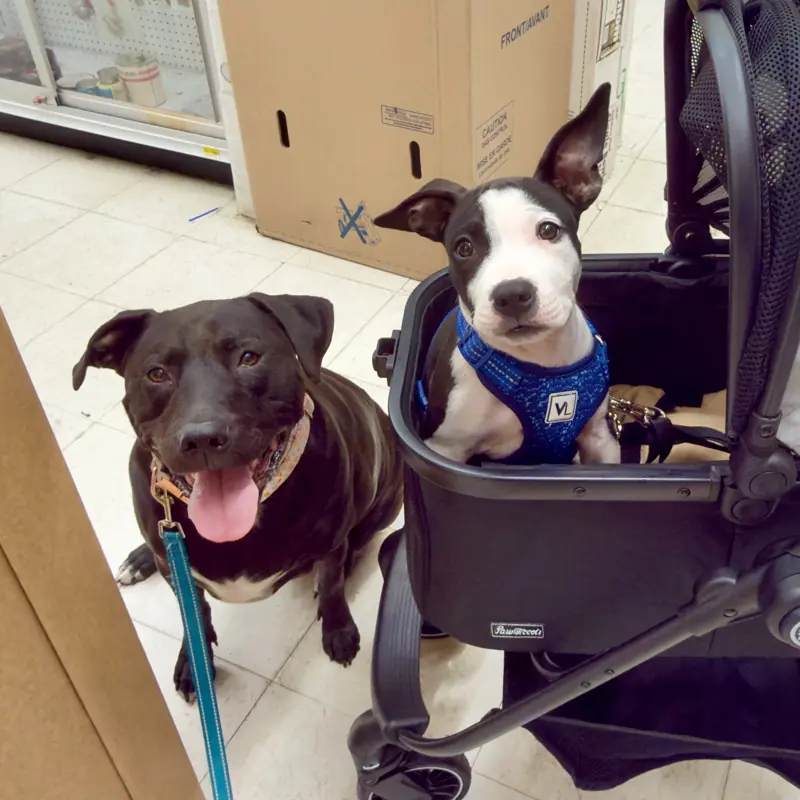
Ask your veterinarian about appropriate precautions and suitable puppy socialization opportunities based on your puppy's vaccination status and local disease risks.
For me, adopting in November offered a useful balance between early development and the opportunity to continue his training outdoors during Arizona's cooler months.
Why Temperament Matters More Than Appearance
Every puppy is cute, but that adorable face doesn't tell you everything about how the dog will fit into your household. Even puppies from the same litter can have very different personalities. One puppy might enthusiastically explore everything around them. Another might prefer to stay close to people. A third might need more time to feel comfortable in an unfamiliar environment. None of those characteristics automatically makes one puppy better than another.
The important question is whether that puppy's individual characteristics are compatible with your lifestyle, experience, expectations, and training goals. For example, a highly energetic, curious puppy might be an excellent match for someone who enjoys dog sports and frequent training activities. But that same puppy could be overwhelming for someone who wants a quieter companion and has limited time for exercise and enrichment.
The best puppy for me might not be the best puppy for you. And that's perfectly okay.
The Moment Abu Really Sold Me
When I went to meet Abu, I brought several unfamiliar objects to observe how he responded to different sights, sounds, textures, and experiences. Perfection wasn't the expectation, and I certainly wasn't expecting him to know any obedience behaviors. I wanted to see his natural curiosity, confidence, independence, engagement, and how he recovered from uncertainty.
And then came the wobble board. If you've ever introduced a dog to balance equipment, you know that unstable surfaces can be intimidating. The surface moves underneath their feet, and dogs have to adjust their balance as they explore it. Many dogs need gradual encouragement and positive experiences before they feel comfortable on that type of equipment.
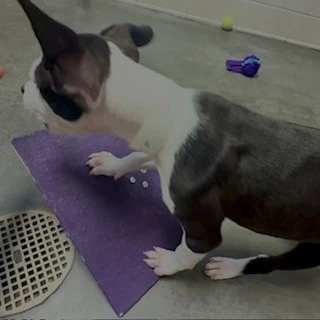
But Abu stepped onto the wobble board without hesitation! He also confidently explored the blue air balance board. That really impressed me. It wasn't that I expected him to know what the equipment was or how to use it. I was interested in his willingness to investigate something unfamiliar. For the type of training I hope to do with Abu, that curiosity and willingness to explore were qualities I valued.
Independence Without Losing Engagement
Something else I really liked was how Abu balanced independent exploration with interacting with people. He would wander off, investigate something, or play with a toy on his own. Then he'd come back to interact with me or Vanessa, who accompanied me during his adoption visit. After a little interaction, he'd head off to explore again. I loved that!
An important trait I didn't want to see was a puppy who needed constant direction or attention from me. I wanted one who could confidently explore his environment but also enjoyed engaging with people. That combination was particularly appealing because I hope to introduce Abu to different training activities, environments, and challenges as he matures.
Five Temperament Traits I Looked for When Choosing Abu
Although the wobble board was the moment that really impressed me, I was considering several other characteristics during our visit.
1. Curiosity and Independent Exploration
Would Abu investigate unfamiliar objects? Was he interested in exploring his surroundings? Could he play with a toy or investigate something without constantly depending on me?
For my goals, I wanted a puppy who showed some willingness to explore independently. That doesn't mean a puppy who prefers staying close to people is a poor choice. It simply wasn't the primary characteristic I was looking for.
2. Engagement With People
I wanted to observe how Abu interacted with me and Vanessa. Did he show interest in us? Would he come back to interact after exploring? Did he enjoy participating in simple activities? Since I wanted a potential training partner, engagement was particularly important.
3. Food Motivation and Willingness to Participate
Food motivation is useful when teaching new behaviors through positive reinforcement. I wanted to see whether Abu was interested in following a food lure and participating in simple, rewarding exercises. This wasn't about expecting a young puppy to know commands already. It was about observing his interest in learning opportunities.
4. Recovery After Something Unfamiliar or Startling
Not everything I introduced during Abu's adoption visit was immediately comfortable for him. One of the unfamiliar toys frightened him. What interested me was how he recovered afterward.
Could he regain his confidence, reengage, and return to exploring?
For my training goals, resilience and recovery were characteristics I wanted to observe. However, this doesn't mean intentionally frightening puppies or pushing them beyond their comfort level.
A cautious or fearful response during an adoption visit doesn't automatically predict future behavior. Stress, fatigue, previous experiences, and the environment can all influence what you observe.
5. Comfort With Gentle Handling and Body Language
Handling was another consideration. As Abu grows, he'll need grooming, nail care, veterinary examinations, and other routine care. I wanted to observe how comfortable he appeared during gentle handling and interactions.
I also watched his overall body language. Was he relaxed? Curious? Hesitant? Comfortable approaching or moving away? Rather than focusing on one behavior, I looked at how he responded throughout our visit.
And remember, comfort with handling isn't something a puppy must already have mastered. Cooperative care is a skill we continue to develop through positive reinforcement, patience, and respect for the dog's boundaries.
What About Breed, Genetics, and Energy Level?
Breed and genetics can influence a dog's physical characteristics, behavioral tendencies, activity level, and interests. However, breed appearance alone doesn't tell you everything about an individual dog. Many breeds were developed for specific types of work. For example, herding breeds may be particularly interested in movement and may display behaviors associated with controlling or chasing moving things. But individual dogs still vary considerably, and mixed-breed rescue puppies can be especially difficult to predict based on appearance.
Considerations Before Adoptions:
- Potential adult size and physical needs
- Daily exercise requirements
- Mental enrichment and training needs
- Grooming and veterinary care
- Your household and existing pets
- Your available time and financial resources
- The dog's individual temperament and known history
Don't assume you'll suddenly become a marathon runner or have unlimited training time because you adopted a high-energy dog. Be realistic about the life you actually live.
Should You Adopt a Puppy or an Adult Rescue Dog?
Both can be wonderful choices, but they come with different considerations.
Adopting a Puppy
With a puppy, you have the opportunity to influence their early experiences through thoughtful socialization, training, and daily routines. But puppies require substantial time and supervision. You'll likely be working through potty training, puppy biting, chewing, handling, and foundational obedience skills.
And even with a young puppy, you can't know exactly what their adult personality will become.
Adopting an Adult Dog
An adult dog may offer a clearer picture of their current size, energy level, and established behaviors. Some adult dogs may already have useful household skills and previous training. However, their history may be incomplete, and they may need time and support to adjust to a new home.
Previous experiences, medical conditions, and environmental changes can all influence their behavior.
Neither option is automatically easier. The right choice depends on your lifestyle, experience, expectations, and the individual dog.
And with adult rescues in particular, there's another major consideration that I think prospective adopters frequently misunderstand. Decompression.
The Dog You Meet at the Shelter May Not Be the Dog You See After Decompression
Here's something I think is hugely misunderstood, especially when adopting adult rescue dogs. The dog you meet at the shelter may behave very differently once they've had time to decompress and settle into their new home.
Think about it this way.
Imagine someone suddenly dropped you into a completely unfamiliar country. You don't understand the language, don't know anyone, and have no idea what to expect. You'd probably feel overwhelmed, uncertain, and maybe even frightened. That's similar to what some dogs experience when they're moved from a familiar environment into a shelter or new home. They may be surrounded by unfamiliar people, dogs, sounds, smells, and routines. And when dogs are experiencing significant stress, their behavior may not reflect how they'll act once they feel comfortable and secure.
Why a Quiet Shelter Dog Might Not Be a Calm Dog
I've seen people choose rescue dogs because they appeared incredibly quiet, timid, or reserved at the shelter. They thought they were adopting a calm, easygoing companion. Then, after a few weeks or months at home, the dog becomes much more energetic, playful, or outgoing. And suddenly they're wondering what happened!
Sometimes, that dog wasn't naturally quiet. They were overwhelmed or showing a stress-related shutdown response. As they became more comfortable, other aspects of their personality started to emerge.
The opposite can also happen. A dog who seems overly excited, restless, or difficult to settle in a shelter may behave much more calmly after adjusting to a predictable home environment.
This is why I caution people against assuming that one brief shelter visit tells them everything about a dog's personality.
A dog can be friendly in one context and fearful or defensive in another. This is why it's so important to pay attention to body language, respect boundaries, and avoid assuming that a few positive interactions tell us everything about a newly adopted dog's comfort level. Being sweet with your family and being comfortable in unfamiliar situations are not necessarily the same thing.
Understanding the 3-3-3 Rule
You may have heard about the 3-3-3 rule for newly adopted dogs. It's a popular guideline that describes three general stages of adjustment:
Three days: The dog may still be overwhelmed by unfamiliar surroundings and routines.
Three weeks: The dog may begin settling into daily routines and showing more comfortable behavior.
Three months: The dog may feel more secure and familiar with their new home.
But here's what I always remind people: The 3-3-3 rule is a guideline, not a deadline.
These timeframes aren't scientifically established milestones that every dog will follow. In my experience working with rescue dogs, some adjust relatively quickly. Others, particularly dogs with limited previous socialization, significant fears, or difficult histories, may need considerably longer. I've worked with dogs whose adjustment and confidence building extended far beyond the commonly discussed three-month period. Don't assume your dog should be completely comfortable because a certain number of days have passed. Instead, pay attention to their behavior and individual progress.
Give Your New Dog Stability Before Expecting Too Much
One of the biggest mistakes I see is people doing too much, too quickly. I understand the excitement! You adopt a new dog and immediately want them to meet your family, visit friends, explore parks, and experience everything you enjoy. But your new dog may not be ready for all that activity.
Instead, focus on establishing a predictable routine and creating a comfortable environment. Give your dog opportunities to rest, explore at their own pace, and become familiar with their new household. That doesn't mean you should avoid all training or experiences during decompression. Gentle, rewarding activities can help build relationships and establish routines. The important thing is to adjust expectations to the dog's current comfort and ability to participate.
Watch for possible stress signals, including:
- Avoiding people or interactions
- Repeated lip licking outside of eating
- Tense or stiff body language
- Showing the whites of the eyes, sometimes called whale eye
- Pacing or difficulty settling
- Panting when not explained by heat or physical activity
- Withdrawing or seeking distance
These signals need to be interpreted in context. No single behavior tells the entire story. And don't assume your new dog wants constant affection. Sometimes the best thing you can do is give them space and allow them to approach you when they're comfortable.
As I explain in my decompression video, you can't rush trust. It develops through time, consistency, and positive experiences.
How Can You Tell Your Dog Is Becoming More Comfortable?
Rather than watching the calendar, look for changes in your dog's everyday behavior. You may begin noticing:
More relaxed body language
Improved rest and sleep
More predictable daily routines
Increased curiosity about their surroundings
Greater willingness to explore
Voluntary interactions with family members
More comfortable engagement during activities
Some dogs become more playful. Others simply seem more comfortable resting and moving around their new home.
These changes can indicate that your dog is adjusting, although there isn't one universal sign that decompression is complete. And remember, if your dog is showing severe distress, persistent fear, or concerning behavior, don't assume you simply need to wait longer. A veterinarian or qualified positive reinforcement behavior professional can help you assess what your dog needs.
Watch My Video: Dog & Puppy Decompression Explained
I've created a separate educational video explaining decompression, the 3-3-3 rule, common mistakes, stress signals, and ways to help newly adopted dogs adjust.
Remember, the goal of decompression isn't perfect obedience. It's helping your new dog feel safe, develop trust, and become comfortable in their new environment.
Can Puppy Temperament Testing Predict Adult Behavior?
This is one of the most important things I want prospective adopters to understand. A temperament assessment can provide information about how a puppy behaves in a particular situation, but it cannot guarantee what that puppy will be like as an adult. When I met Abu, I wasn't conducting a test that could tell me exactly what kind of dog he would become. I was gathering observations. His responses to unfamiliar objects, people, handling, and opportunities to explore gave me useful information about his behavior that day.
With that said, puppies continue developing, and their behavior is influenced by genetics, health, environment, experiences, and ongoing learning. A puppy who seems cautious during one visit may become much more confident in a familiar, supportive environment. Similarly, a confident puppy will still need training, appropriate socialization, and guidance. And as we just discussed, adult rescue dogs may also behave differently after decompressing and becoming comfortable in their new homes.
It's important not to label dogs based on one brief interaction. Instead, gather as much information as possible, consider the dog's individual circumstances, and recognize that behavior can change over time.
Questions to Ask Before Adopting a Rescue Puppy or Dog
If you're considering adding a dog to your household, I encourage you to ask the rescue organization, shelter staff, or foster family questions such as:
- What is known about the dog's previous history?
- Are there any medical concerns or ongoing care requirements?
- How does the dog typically interact with people?
- What has been observed around other dogs or household pets?
- How does the dog respond to unfamiliar environments?
- Are there known handling sensitivities, fears, or behavioral challenges?
- What exercise and enrichment needs have been observed?
- Has the dog spent time in a foster home?
- Have caregivers noticed changes in behavior as the dog becomes more comfortable?
- What support or resources are available after adoption?
Sometimes the answers will be incomplete. That's especially true for rescue dogs whose histories are unknown or who have only recently entered a shelter.
Whenever possible, consider observations from multiple situations and people rather than basing your entire decision on one brief meeting. If you're adopting an adult dog, information from a foster home can be particularly helpful because it may provide insight into how the dog behaves in a more typical household environment. But even foster observations aren't guarantees. Every home is different, and dogs may respond differently to new people, routines, animals, and environments.
Choose the Dog That Fits the Life You Actually Live
If there's one thing I want people to remember from Abu's adoption story, it's this: Choose a dog whose needs align with the life you're actually living, not just the lifestyle you imagine having.
To me, that meant looking beyond Abu's adorable face. I had to think about the financial commitment of a fifth dog, my available time, my other dogs' personalities, the Arizona climate, and my long-term goals as a professional trainer. I also wanted a puppy who showed curiosity, confidence, independence, engagement, and interest in working with people. Abu showed me some promising characteristics during our first meeting. But does that mean he'll grow into exactly the dog I imagined?
Of course not! He'll have his own personality, strengths, preferences, and challenges. And that's part of raising a puppy.
Whether you adopt a young puppy or an adult rescue dog, it's important to recognize that you're beginning a relationship with an individual whose behavior and needs may change as they grow or become more comfortable.
Now it's my responsibility to provide Abu with the training, socialization, enrichment, and positive experiences that will help him become the best version of himself.
Frequently Asked Questions About Choosing a Rescue Puppy or Dog
Look at the puppy's overall behavior rather than expecting a perfect response to any single activity. Observe their curiosity, willingness to explore, interactions with people, body language, and recovery after unfamiliar experiences. However, a brief observation cannot reliably predict adult temperament, and the right personality depends on your individual household and goals.
Neither is automatically better. Puppies offer opportunities to shape early experiences, but they require substantial time for socialization, supervision, potty training, and developing household skills.
Adult dogs may have established behaviors and a more predictable physical size, but their histories can be incomplete. They also need time to adjust to their new environment.
Choose based on your lifestyle, available time, experience, and the individual dog's needs.
All dogs adjust differently. You may have heard of the 3-3-3 rule, which describes approximately three days, three weeks, and three months as general adjustment stages.
While these are not scientifically established deadlines, some rescue dogs need much longer, particularly when adjusting to unfamiliar environments or recovering from stressful experiences.
Focus on predictable routines, appropriate space, relaxed body language, and gradual increases in confidence rather than expecting progress on a fixed schedule.
Absolutely! Dogs may behave differently as they become familiar with their new environment.
For example, a dog who appears quiet or withdrawn in a shelter may become more playful and energetic at home. Conversely, a dog who appears overstimulated in a shelter may become calmer with a predictable routine.
For this reason, I encourage adopters to consider shelter and foster observations together and avoid making assumptions based on a single interaction.
Follow Abu's Training Journey
I'm documenting Abu's development through my Abu in Training video series, sharing real experiences as I raise and train him using force-free, positive reinforcement methods. You'll see everything from early confidence building and cooperative care to obedience foundations, socialization, and more advanced training skills as he grows. And I'm sure we'll have some challenges and unexpected lessons along the way!
If you're thinking about adopting a rescue dog or puppy and would like professional guidance, FurBabies & Friends offers private puppy training, obedience classes, and personalized training support in Glendale, Peoria, and the Northwest Phoenix Valley.
Because finding the right dog is only the beginning. What you build together afterward matters just as much.
Follow FurBabies & Friends on TikTok, Instagram, Facebook, and YouTube at @furbabiesandfriendsaz for training tips, pet care education, and local event updates.