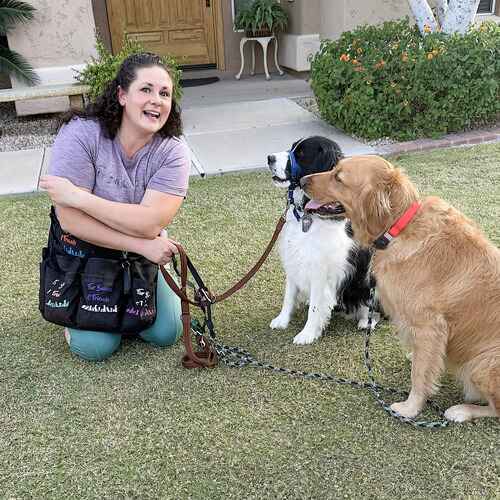
Choosing a dog trainer can feel overwhelming, especially in Glendale, Peoria, and the Phoenix West Valley, where every trainer seems to offer different methods, packages, tools, and promises. Some focus on obedience and structure. Others specialize in puppy training, leash reactivity, behavior support, or group classes. However, the biggest difference is not always the service menu. It is the trainer’s method, ethics, experience, and ability to teach both the dog and the human.
If you are wondering how to choose a dog trainer, start by looking beyond flashy before-and-after videos or guaranteed results. Dog training is not a regulated industry, which means anyone can legally call themselves a dog trainer. That makes it even more important to understand training styles, ask the right questions, read reviews carefully, and know which dog trainer red flags to watch for before you trust someone with your dog.
For many pet parents, the real goal is not military-style obedience or robotic precision. Instead, they want better communication, safer walks, improved manners, more confidence, and a stronger relationship with their dog. That is where choosing a positive reinforcement dog trainer in Glendale or the surrounding West Valley can make a major difference, especially if you want training that builds trust instead of relying on fear, force, or intimidation.
In this guide, we will walk through the most important questions to ask before hiring a dog trainer, how to compare training methods, what credentials and experience actually mean, how to evaluate reviews and social media, and what to consider before spending thousands on a board and train program. Whether you are looking for puppy help, obedience training, leash manners, or behavior support, this article will help you make a more informed decision about dog training in Glendale AZ and the Phoenix West Valley.
A good dog trainer does more than train the dog. They help you understand your dog, set realistic expectations, and build communication that works in everyday life.
Kristie Halverson
Table Of Contents
Why choosing the right dog trainer matters
Dog training is not a regulated industry
Understand dog training methods before you hire
Questions to ask before hiring a dog trainer
Dog trainer red flags to watch for
Credentials, experience, and professional standards
Board and train questions to ask before spending thousands
Frequently asked questions
Choosing a dog trainer is not just about teaching your dog to sit, stay, or walk nicely on leash. It is about choosing the person who will influence how your dog learns, how they feel during training, and how you communicate with them at home, on walks, and in real life.
A good trainer should help you understand why your dog is doing what they are doing, not just tell you how to stop it. For example, leash pulling, barking, jumping, reactivity, fear, and poor impulse control often have different causes. Some dogs need clearer structure. Others need confidence building. Some need better exercise and enrichment. Meanwhile, others need a slower training plan because they are nervous, overwhelmed, or frustrated.
That is why choosing a trainer based only on price, speed, or flashy results can backfire. Fast obedience is not always the same as long term behavior change. A dog may look “fixed” in a controlled video, but the real test is whether the family understands how to maintain those skills safely and humanely after the trainer leaves and if those new behaviors consistently translate with new environments, sights, sounds, people or other distractions.
Before hiring someone for dog training in Glendale AZ or the surrounding Phoenix West Valley, look at the whole picture: methods, experience, communication style, reviews, credentials, follow up support, and whether the trainer’s approach matches the kind of relationship you want with your dog.
Dog Training Is Not A Regulated Industry
One of the most important things pet parents need to understand is that dog training is not a tightly regulated industry. Unlike veterinarians, dog trainers do not have one official licensing board that oversees the entire profession, sets universal standards, or prevents unqualified people from marketing themselves as trainers.
That means someone can legally call themselves a dog trainer even if they have limited hands on experience, no formal education, no professional memberships, no continuing education, and no clear understanding of animal behavior. This does not mean every trainer without a certification is unqualified. However, it does mean clients need to do more research before trusting someone with their dog.
This is where your homework matters. A trustworthy trainer should be able to explain their methods clearly, describe their experience honestly, answer questions without becoming defensive, and help you understand what will happen during training. If a trainer cannot explain what they do in plain language, that is a concern.
Because the dog training field has so much variation, the best question is not simply, “Are you a dog trainer?” A better question is, “What kind of trainer are you, what methods do you use, and how will you teach me to help my dog succeed?”
Because dog training is not regulated the same way as many other professions, pet parents need to ask better questions before hiring a trainer.
Understand Dog Training Methods Before You Hire
Before you compare prices or packages, compare training methods. This is one of the biggest decisions you will make when choosing a dog trainer in Glendale and the Phoenix West Valley.
Dog trainers often use similar words, such as obedience, behavior modification, leash training, puppy training, or confidence building. However, the way they get results can be very different. Some trainers focus on positive reinforcement and relationship based learning. Others use a balanced training approach that may include rewards along with corrections, pressure, leash pops, prong collars, or electronic collars. Some programs rely heavily on correction based methods and obedience compliance.
This matters because you are not only choosing what your dog will learn. You are choosing how your dog will be taught. For training longevity, it is also important to be honest on what you will be comfortable doing or tools you will be using.
Training Method Comparison Table
TRAINING APPROACH
WHAT IT USUSALLY MEANS
WHAT PET PARENTS SHOULD ASK
Positive Reinforcement
The trainer teaches desired behaviors by rewarding good choices, building confidence, and helping the dog understand what to do.
What rewards do you use, how do you handle mistakes, and how will you teach me to continue training at home?
Force Free Training
The trainer avoids tools or methods that rely on fear, pain, intimidation, or physical corrections.
Do you use shock collars, prong collars, choke chains, leash corrections, or physical punishment?
Balanced Training
The trainer may use rewards, but may also use corrections, pressure, or aversive tools.
What corrections do you use, when are they used, and will I be expected to use those tools at home?
Correction Heavy Training
The trainer may focus more on stopping behavior through punishment, pressure, or compliance based handling.
How do you protect my dog’s emotional welfare, and what happens if my dog is fearful or confused?
Board & Train
The dog stays with the trainer for a set period of time to work on skills away from home.
How many transfer sessions are included, what tools are used, and how will I learn to maintain the training?
Positive Reinforcement Vs. Balanced Dog Training
This is one of the most important choices you will make as a dog owner. A positive reinforcement dog trainer in Glendale will focus on teaching your dog what to do, rewarding the behaviors you want to see more often, and helping your dog build confidence through clear communication.
Positive reinforcement is not bribery. It is not permissive. It does not mean your dog gets to do whatever they want. Instead, it means the trainer uses rewards, structure, management, and consistent practice to help the dog make better choices. The goal is to create learning without relying on fear, pain, intimidation, or physical corrections.
Balanced training is different. Balanced trainers often use rewards, but they may also use corrections or aversive tools. This can include prong collars, choke collars, leash corrections, electronic collars, or other forms of pressure. Some clients are comfortable with that. Others are not. The key is that you need to know what you are agreeing to before you hire the trainer.
For example, if a trainer uses remote collar training, ask whether you will be expected to carry the remote and use it after the program ends. Ask who will teach you timing, pressure levels, safety rules, and what to do if your dog becomes fearful, confused, or shut down. If the trainer cannot explain that clearly, pause before moving forward.
There is no shame in wanting a dog who listens reliably. However, clients need to be honest about their goals and comfort level. Do you want real world manners, better communication, and a stronger relationship with your dog? Or are you looking for military style precision and strict compliance? Both require work, but they are not the same training path.
Also, be realistic about time. Precision obedience requires practice. If you want polished, highly reliable behaviors in multiple environments, you will need to train consistently. A trainer can guide the process, but no trainer can replace the daily communication between you and your dog.
Questions To Ask Before Hiring A Dog Trainer
The best way to compare trainers is to ask direct questions before you commit. A trustworthy trainer should be able to explain their methods, tools, experience, expectations, and follow up support in a way that makes sense to you. If their answers feel vague, defensive, or overly sales focused, slow down.
These questions are not about being difficult. They are about protecting your dog, your money, your time, and your long term relationship with your pet.
Ask About Training Methods And Tools
What training methods do you use?
Do you use positive reinforcement, force free training, balanced training, or correction based methods?
Do you use shock collars, e-collars, prong collars, choke chains, leash corrections, spray bottles, bonkers, or other aversive tools?
How do you handle mistakes when a dog does not understand what you are asking?
What do you do if a dog becomes scared, overwhelmed, frustrated, or shut down?
Will I be expected to use the same tools after training ends?
Ask About Experience And Specialties
How long have you been professionally training dogs?
What types of behavior concerns do you work with most often?
Do you have experience with puppies, adolescent dogs, leash reactivity, fear, anxiety, or multi-dog households?
Have you worked with dogs in real homes, shelters, rescues, group classes, or public environments?
Can you explain what kind of cases are outside your scope and when you refer to a veterinarian or veterinary behavior professional?
Ask About Owner Involvement
Will you teach me how to continue the training at home?
How much daily practice should I expect?
Will I receive homework, written instructions, videos, or follow up support?
How will you help me understand my dog’s behavior, not just control it?
What happens if my dog does well with you but struggles with me?
Ask About Expectations And Results
What results are realistic for my dog’s age, temperament, history, and environment?
How many sessions may my dog need?
What factors could slow progress?
Do you guarantee results, and if so, what does that actually mean?
How do you measure progress beyond basic obedience commands?
A good dog trainer should welcome thoughtful questions. In fact, organizations such as the Certification Council for Professional Dog Trainers recommend asking whether a trainer can answer questions clearly, has experience with your concerns, and can provide references or evidence of professional work.
If a trainer cannot clearly explain what they will do when your dog gets something wrong, that is information you need before hiring them.
Dog Trainer Red Flags To Watch For
Not every trainer will be the right fit for every dog or family. However, some warning signs should make you pause before handing over your dog, your money, or your trust.
Dog trainer red flags are not always obvious at first. Sometimes they are hidden behind confident marketing, impressive before and after videos, or big promises. That is why pet parents need to look at how the trainer explains their process, how they treat dogs under stress, and how much they involve the owner.
Common Red Flags When Hiring A Dog Trainer
The trainer guarantees a quick fix for serious behavior concerns.
The trainer says they can “fix” any dog without first evaluating the dog.
The trainer refuses to explain their methods or tools.
The trainer uses vague language like “communication,” “leadership,” or “accountability” but will not define what that means in practice.
The trainer relies heavily on dominance, alpha, pack leader, or submission based language.
The trainer blames the dog instead of adjusting the training plan.
The trainer discourages owner involvement or says the dog needs to be trained away from the family.
The trainer promises major behavior change without discussing management, consistency, environment, or follow through.
The trainer uses shock, prong, choke, or other aversive tools without clearly explaining risks, timing, owner responsibility, and alternatives.
The trainer does not discuss stress signals, fear, pain, medical factors, or emotional welfare.
The trainer has very few reviews, inconsistent reviews, or reviews that do not match the service you need.
The trainer cannot show ongoing education, professional involvement, or real experience with dogs like yours.
One of the biggest red flags is when a trainer focuses only on stopping behavior without explaining why the behavior is happening. Barking, lunging, growling, hiding, pulling, jumping, and chewing are not just annoying habits. They are information. A qualified trainer should help you understand what the dog is communicating and what needs to change in the training plan, environment, routine, or owner handling.
Another red flag is pressure. If you feel rushed into an expensive program, pushed into a tool you are uncomfortable using, or told your dog will get worse unless you sign up immediately, take a step back. Good training should include education, transparency, and realistic expectations.
Credentials, Experience, And Professional Standards Matter
Because dog training is not regulated by one universal licensing board, credentials and professional standards can help you evaluate a trainer. However, they should not be the only thing you look at.
Dog training credentials can mean different things depending on the organization. Some certifications require testing, documented experience, continuing education, and adherence to professional standards. Other titles may be easier to obtain or may simply reflect membership in an organization. That does not make every uncertified trainer bad, and it does not automatically make every certified trainer the right fit. It means you need to understand what the credential actually represents.
Professional memberships can also be helpful because they may show that the trainer is involved in continuing education, industry discussions, and ethical standards. For example, organizations such as APDT, IAABC, PPG, and CCPDT can give pet parents a starting point for understanding a trainer’s education, philosophy, and professional involvement.
Still, experience matters. A trainer’s years of professional work, service offerings, rescue or shelter experience, foster work, client reviews, and real world handling skills all help paint a fuller picture of competence. A trainer who has worked with a wide range of dogs in homes, group classes, shelters, rescues, and public environments may bring a more practical understanding of behavior than someone who only markets quick obedience results.
What To Look For Beyond A Title
Years of professional dog training experience
Types of cases the trainer regularly works with
Education in dog behavior, learning theory, body language, and welfare
Professional memberships or certifications
Continuing education through seminars, courses, workshops, or conferences
Rescue, shelter, foster, or volunteer animal experience
Clear service offerings and realistic explanations
Reviews that mention communication, compassion, progress, and owner education
Public training videos or examples that show how the trainer works with dogs
A willingness to refer out when a case needs veterinary or specialized behavior support
A strong trainer should be able to say, “This is what I know, this is what I do, this is what I do not do, and this is how I will help you and your dog.” That level of honesty matters.
How To Read Reviews When Comparing Dog Trainers
Reviews matter, but they should be read carefully. A five star rating is helpful, but it does not tell the whole story. When comparing dog trainers in Glendale, Peoria, and the Phoenix West Valley, look at the number of reviews, how long the trainer has been reviewed, what services are mentioned, and whether the reviews match the type of help you need.
For example, if you need help with leash reactivity, look for reviews that mention reactive dogs, leash manners, confidence building, barking, lunging, or public walking skills. If you have a puppy, look for reviews that mention puppy training, household routines, socialization, potty training, bite inhibition, or family participation.
Also, pay attention to the language clients use. Strong reviews often mention more than results. They mention feeling supported, educated, heard, and confident. That matters because dog training is not just about whether the trainer can get the dog to perform a behavior. It is about whether the owner can understand and continue the training after the session ends.
Review Details That Matter
How many reviews does the trainer have?
Are the reviews recent and spread out over time?
Do reviews mention the specific service you need?
Do clients talk about owner education and follow through?
Do reviews describe the dog feeling more confident or comfortable?
Are there reviews from puppy owners, reactive dog owners, senior dog owners, or multi-dog families?
Does the trainer respond professionally to feedback?
Do the reviews sound specific and real, or vague and repetitive?
A trainer with a long review history across several years may give you more useful information than a trainer with only a few recent reviews. Consistency over time matters, especially in a field where trust, safety, and communication are just as important as technical skill.
Look At The Trainer’s Public Work
A trainer’s website can tell you what they want to advertise. Their public work can often show you how they actually interact with dogs.
Before hiring a trainer, look at their social media, website photos, YouTube videos, class clips, and examples of client work. You are not looking for perfection. In fact, overly polished videos can sometimes hide the real training process. Instead, look for how the trainer teaches, rewards, handles mistakes, reads body language, and responds when a dog is confused, excited, distracted, or unsure.
A trainer’s personal dogs can also give helpful context, but they should not be the only deciding factor. Some excellent trainers have dogs with quirks, medical needs, reactivity, or normal real life challenges. That does not automatically make them unqualified. However, how they talk about and work with their own dogs can show you a lot about their patience, expectations, and training philosophy.
What To Look For In Videos Or Social Media
Does the dog look engaged, comfortable, and willing to participate?
Does the trainer reward the dog clearly and consistently?
Does the trainer explain what they are doing?
Does the trainer show the learning process, or only polished final results?
Does the trainer handle mistakes calmly?
Does the trainer talk about body language, stress, confidence, and communication?
Are dogs given breaks when needed?
Are tools clearly visible and explained?
Do the videos match the training philosophy listed on the website?
Do not be fooled by dramatic before and after clips alone. A short video can show obedience, but it may not show stress, suppression, owner education, or long term reliability. Look for trainers who are willing to show the process, not just the performance.
Private Training, Group Classes, Day Training, Or Board And Train
Choosing the right dog trainer also means choosing the right training format. The best option depends on your dog’s age, temperament, behavior concerns, your schedule, and how much hands on coaching you need.
There is no one perfect format for every dog. A puppy learning basic manners may do well in a group class. A dog with leash reactivity may need private training before joining a group environment. A busy family may benefit from day training, as long as owner coaching is included. A board and train program may jump start skills, but it still requires strong transfer training so the owner knows how to maintain results.
TRAINING FORMAT
BEST FOR
WHAT TO ASK BEFORE BOOKING
Private Training
Custom goals, in home behavior support, leash reactivity, family routines, and dogs who need individualized coaching
Will you teach me how to practice between sessions, and will I receive homework or follow up support?
Group Classes
Basic obedience, social focus, controlled distractions, puppy skills, and owners who want structured weekly practice
Is my dog appropriate for a group setting, and how are nervous, reactive, or over excited dogs handled?
Day Training
Busy families who want the trainer to work directly with the dog while still receiving owner coaching
How many transfer sessions are included, and how will I learn to maintain the behaviors?
Board & Train
Jump starting obedience, leash manners, and structured routines in a trainer’s environment
What tools are used, how many hand off sessions are included, and what happens after the dog comes home?
Virtual Training
Coaching for owners who need flexible support, preparation help, or follow up guidance
Is my issue appropriate for virtual support, and what materials will I receive?
The key is not just what the dog learns during training. The key is whether you can continue the training when the dog is back in your home, walking in your neighborhood, greeting guests, or responding to real life distractions.
Board And Train Questions To Ask Before Spending Thousands
Board and train programs are heavily marketed in the Phoenix area, and some can cost several thousand dollars. For the right dog, with the right trainer, and with the right follow up plan, a board and train program may help jump start obedience, leash manners, impulse control, and routine building.
However, board and train is not magic. Your dog may learn skills in the trainer’s home or facility, but your home, your habits, your timing, your leash handling, your routines, and your relationship still matter. Dogs do not automatically generalize every skill to every person, place, and environment without practice.
That is why the hand off process is critical. If a program includes two to four hours of owner transfer training after weeks away from home, ask yourself whether that is truly enough for you to understand the system, practice the skills, troubleshoot problems, and maintain results long term.
Ask These Questions Before Choosing Board And Train
Where will my dog stay and how long will my dog be crated a day?
How much time will be spent per day training with my dog?
What training methods and tools will be used with my dog?
Will my dog be trained with food, toys, praise, corrections, prong collars, e-collars, slip leads, or other tools?
How many hand off sessions are included after the program?
Will I receive written instructions, videos, homework, or follow up sessions?
Can I observe any part of the training process?
What happens if my dog regresses at home?
How will you teach me leash handling, timing, reinforcement, and management?
How will the training transfer to my home, neighborhood, family, and daily routine?
What happens if my dog becomes fearful, stressed, shut down, or reactive during the program?
Are there follow up lessons included after the dog comes home?
What support is available 30, 60, or 90 days after the program?
A board and train program should never remove the owner from the learning process. At some point, the dog has to live with you, listen to you, walk with you, and respond to your real life routines. If the owner is not trained too, the results may not hold.
In many cases, the best long term success comes from training both ends of the leash. The dog needs clear teaching, but the human needs coaching, timing, confidence, and realistic expectations.
A Good Dog Trainer Is Also A Human Trainer
This is one of the most overlooked parts of dog training. A good trainer is not just there to make the dog perform commands. A good trainer should assess the dog, identify what motivates them, notice where they struggle, and translate that information back to the owner in a way that is clear and useful.
In real life, most owners do not need a dog who can perform like a competition obedience dog. They need a dog who can walk safely, settle in the home, greet people more appropriately, respond to cues, handle normal distractions, and trust their family. That requires more than commands. It requires communication.
A strong dog trainer should help you understand what your dog is saying through their behavior. Pulling on leash, barking at dogs, jumping on guests, ignoring cues, stealing items, or struggling to settle are not just training failures. They are signs that your dog needs clearer guidance, better reinforcement, better management, more appropriate outlets, or a different training plan.
What A Good Trainer Should Help You Do
Understand why your dog is struggling
Set realistic goals based on your dog’s age, history, temperament, and environment
Learn how to reward the behaviors you want
Practice timing, leash handling, cue delivery, and consistency
Read basic dog body language and stress signals
Build routines that support better behavior
Adjust expectations when your dog is overwhelmed
Continue progress between sessions
Know when a behavior concern may need veterinary support
Strengthen your relationship with your dog
This is why choosing the right dog trainer matters so much. You are not just buying a package. You are choosing the person who will help you understand your dog and build skills you can actually use after training ends.
Choosing A Positive Reinforcement Dog Trainer In Glendale And The Phoenix West Valley
If you are looking for dog training in Glendale AZ, Peoria, or the Phoenix West Valley, choose a trainer whose methods match your values, your goals, and your dog’s needs. The right trainer should be transparent about tools, honest about expectations, and committed to helping both you and your dog succeed.
Whether you need puppy training, basic obedience, leash manners, group classes, or behavior support, the goal is not to scare or force your dog into compliance. The goal is to help your dog understand, help you lead with clarity, and create skills that work in everyday life.
Kristie Halverson, owner and trainer of FurBabies & Friends, brings years of professional training experience, more than 20 years working with dogs, rescue and foster experience, and a commitment to humane, positive reinforcement training. FurBabies & Friends serves families throughout Glendale, Peoria, and the Phoenix West Valley with dog training and pet care services built around safety, trust, and compassion.
What Questions Should I Ask Before Hiring A Dog Trainer?
Before hiring a dog trainer, ask what methods they use, what tools they recommend, how they handle mistakes, how much owner involvement is expected, and what kind of follow up support is included. You should also ask about experience with your dog’s specific needs, such as puppy training, leash reactivity, fear, anxiety, obedience, or behavior support.
A trustworthy trainer should be able to explain their process clearly. If the answer is vague, defensive, or focused only on quick results, keep asking questions before you commit.
How Do I Know If A Dog Trainer Uses Positive Reinforcement?
Before hiring a dog trainer, ask what methods they use, what tools they recommend, how they handle mistakes, how much owner involvement is expected, and what kind of follow up support is included. You should also ask about experience with your dog’s specific needs, such as puppy training, leash reactivity, fear, anxiety, obedience, or behavior support.
A positive reinforcement dog trainer should focus on rewarding desired behaviors, teaching replacement skills, building confidence, and helping the dog understand what to do. They should be able to explain how they use food, toys, praise, play, management, and practice to support learning.
Ask directly whether they use shock collars, prong collars, choke chains, leash corrections, physical punishment, or intimidation. A force free trainer should be transparent about avoiding methods that rely on fear, pain, or coercion.
What Are Dog Trainer Red Flags?
Dog trainer red flags include guaranteed quick fixes, vague training methods, pressure to buy an expensive package immediately, refusal to explain tools, heavy dominance or alpha language, discouraging owner involvement, or blaming the dog instead of adjusting the training plan.
Another major red flag is when a trainer focuses only on stopping behavior without helping you understand why the behavior is happening. Good training should include education, realistic expectations, and a clear plan for both the dog and the owner.
Is Board And Train Worth It?
Board and train can be helpful in some situations, especially for jump starting obedience, leash manners, and structured routines. However, it is not a magic fix. Your dog still needs to learn how to respond to you, in your home, with your routines, and around your real life distractions.
Before spending thousands on a board and train program, ask how many hand off sessions are included, what tools will be used, what follow up support is available, and how the trainer will teach you to maintain the results after your dog comes home.
Are Dog Trainers Licensed Or Regulated?
Dog training is not regulated by one universal licensing board. That means pet parents need to look carefully at a trainer’s methods, experience, reviews, professional involvement, continuing education, and transparency before hiring.
Certifications and memberships can be helpful, but they are only part of the picture. A trainer should also have hands on experience, clear communication, ethical methods, and the ability to teach owners how to continue training in everyday life.
Ready To Choose A Dog Trainer You Can Trust?
Choosing a dog trainer is a big decision. You are not just hiring someone to teach commands. You are choosing a professional who will help shape how your dog learns, how you communicate, and how your family builds long term success at home and in the real world.
FurBabies & Friends offers positive reinforcement dog training in Glendale, Peoria, and the Phoenix West Valley. Our training programs focus on clear communication, practical skills, relationship building, and force free methods that help dogs and their people work together with more confidence.
Whether you need help with puppy training, obedience, leash manners, group classes, or behavior support, we can help you choose the training path that fits your dog, your goals, and your daily life.
Want to learn more about our positive dog training approach? Meet Kristie Halverson, the founder and force free dog trainer behind FurBabies & Friends and her RESPPPECT dog training philosophy.
Kristie Halverson is the owner and founder of FurBabies & Friends in Glendale, Arizona. She is a force free, positive reinforcement dog trainer with over 8 years of professional experience and more than 20 years working with dogs. Kristie specializes in puppy training, obedience, leash reactivity, group classes, and in home behavior support.
In addition to working with client dogs, Kristie has fostered, rehabilitated, and trained more than 70 dogs through rescue and shelter work. Her training approach focuses on clear communication, relationship building, humane methods, and helping pet parents understand the dog in front of them.
Follow FurBabies & Friends on TikTok, Instagram, Facebook, and YouTube at @furbabiesandfriendsaz for training tips, pet care education, and local event updates.
Learn more about FurBabies & Friends, the most trusted Glendale dog training and pet care team. Our positive reinforcement trainer, Kristie Halverson, helps dogs and their humans thrive through compassionate, force-free training. A dedicated team of pet sitters and dog walkers also follow the same philosophy's.
If you’ve been searching for trusted Glendale dog training, you’re in the right place. FurBabies & Friends is more than just a pet service company, it’s a local community built around helping dogs and their humans thrive together. Founded and led by Kristie Halverson, our team provides personalized, force-free training, compassionate pet care, and a variety of services designed to make life easier for pet parents across the Phoenix West Valley.
Building Stronger Bonds Through Positive Reinforcement
At FurBabies & Friends, training isn’t about dominance or control, it’s about communication, trust, and teamwork. Every session uses positive reinforcement methods, focusing on what your dog does right rather than punishing mistakes. This approach helps dogs feel safe, confident, and eager to learn.
Whether you’re teaching basic manners or advanced tricks, our programs are designed to strengthen your bond while addressing real-world challenges.
Get To Know Kristie, FurBabies & Friends Positive Dog Trainer
Kristie Halverson is a professional, force-free Glendale dog trainer with over seven years of experience and more than two decades of hands-on experience as a pet parent. She’s a proud member of the Pet Professional Guild, IAABC Foundation, and Association of Professional Dog Trainers (APDT). Kristie follows the LIMA (Least Intrusive, Minimally Aversive) guidelines and never uses shock, prong, or choke collars. Additionally she created her own Training Principles, which is all about RESPPPECT.
Reward
Exercise
Socialize
Positive
Punctual
Patient
Energy
Consistent
Trust
This foundation ensures that every dog learns in a safe, supportive, and structured environment.
Exceptional West Valley Dog Training Designed For All, No Matter The Age
From new puppies to senior companions, FurBabies & Friends offers tailored puppy and dog training for all life stages.
Puppy Programs & AKC S.T.A.R. Puppy – Build confidence, focus, and good manners right from the start.
Obedience & Behavior Training – Strengthen communication, improve recall, and create calm, well-mannered dogs.
Trick & Freestyle Foundations – Add fun and enrichment while teaching impressive tricks and routines.
Canine Good Citizen (CGC) – Prepare your pup for this respected AKC certification using force-free methods.
Reactivity & Desensitization – Help your dog stay calm and focused around other dogs, people, or distractions.
All training takes place in Glendale and surrounding Phoenix West Valley neighborhoods, offering convenient in-home sessions and group classes at trusted local parks and venues.
We're So Much More Than Dog Training
FurBabies & Friends is also Glendale’s one-stop resource for all things pet care. Beyond training, our team offers:
Dog Walking & Pet Sitting – Reliable, bonded, and insured local care while you’re away.
Grooming Services – Cage-free, one-on-one sessions for anxious, senior, or reactive pets.
Pet Photography – Seasonal photoshoots and custom portraits that capture your furry family members.
Specialty Services – Including pet taxi, wedding attendant, and house-sitting options.
Everything we do reflects the same level of care, professionalism, and compassion that makes us a trusted choice for hundreds of Glendale pet parents.
Why Phoenix West Valley Pet Parents Love Us
Clients describe FurBabies & Friends as “patient,” “knowledgeable,” and “genuinely passionate.” But what really sets us apart is our commitment to helping pet parents succeed beyond training sessions. We educate, support, and celebrate every milestone, from a puppy’s first sit to a graduate’s off-leash success.
Get Started on Your Dog Training Journey Today
Ready to begin your dog’s transformation? Contact FurBabies & Friends today to schedule your in-home evaluation or join one of our local group classes.