
The first time I used a nail grinder with Abu, I wanted to see how he’d handle three things: having his paws picked up, hearing the grinder run, and feeling it touch a nail. He was comfortable enough for me to pick up his paws and put them back down. He kept taking treats when I turned the grinder on. Then I touched it to his first nail, and his response changed.
Watch Abu’s first nail-grinding session
Start with the part your puppy can handle comfortably
At about 4:07, I touch Abu’s front and back paws. Then I pick up one paw briefly and put it right back down. If your puppy pulls away at the first touch, that tells you where to start. Try a lighter touch higher up the leg, take your hand away, and offer a reward. Build toward touching the paw and lifting it as your puppy gets comfortable. VCA’s guide to preparing dogs for nail care
Let your puppy hear the grinder before it touches a nail
I introduce the grinder to Abu while it’s switched off. At about 5:28, I turn it on briefly while he’s taking treats, then switch it off again. For a puppy who startles at the sound, start farther away and keep the sound brief. A session can end there. You can practice paw handling at another time and bring the two together when each feels manageable for your puppy.
Watch what changes when you try the first nail
At 7:56, just after the first nail, I point out that Abu has stopped eating and is starting to resist. He’d been taking food readily moments before, so that change gave me information about how he was handling this step.
If your puppy pulls away, let the paw go and pause. You can go back to a step they were comfortable with, such as a brief paw touch or hearing the grinder from farther away. You can also finish for the day. One nail may be plenty. For some puppies, a first session might be as simple as hearing the grinder and staying comfortable. VCA’s guide to reducing nail-trim stress
Do I need a grooming table to practice?
I use a grooming table in Abu’s video. You can start on a nonslip mat on the floor, wherever your puppy can stand or sit comfortably. If you do use a raised surface, stay with your puppy the entire time. Once you’re ready to grind, use brief contact so heat doesn’t build up on the nail. If your puppy shows significant fear, struggles repeatedly, or seems painful when you touch a paw, pause and ask your veterinarian or an experienced grooming professional for guidance. VCA’s nail-trimming guide
Give your puppy something familiar to come back to
When you practice again, start with something your puppy has already handled comfortably. That might be letting you touch a back paw or hearing the grinder from across the room. Give yourself enough time to notice how they respond before you add the next step. You can use the same approach when introducing brushing, ear checks, and other grooming routines.
FurBabies & Friends’ guide to cooperative care for grooming and vet visits
Want Help Getting Your Dog Comfortable With Nail Grinding?
Whether you’d like to learn how to grind your dog’s nails at home or want help introducing your puppy to the grinder, schedule a grooming visit with FurBabies & Friends. Tell us how your dog responds to paw handling and the sound of the grinder. We’ll help you find a comfortable starting point and show you what to practice between visits.
Frequently Asked Questions About Puppy Nail Care
Start with how your puppy responds. Some puppies are more comfortable with the brief pressure of clippers. Others do better with a grinder, which lets you take off a little at a time but adds sound and vibration. In Abu’s session, he kept taking treats while the grinder was running, then stopped eating after it touched his first nail. How your puppy responds to the tool from a distance is only one part of deciding what they’re ready for. VCA’s guide to dog nail trimming
If the nails need attention before your puppy is ready for a trim at home, contact a groomer and explain what your puppy already handles comfortably and where they start to pull away. That gives the groomer a better idea of what to expect. If your puppy seems painful when you touch a paw or repeatedly panics during handling, start with your veterinarian.
Follow FurBabies & Friends on TikTok, Instagram, Facebook, and YouTube at @furbabiesandfriendsaz for training tips, pet care education, and local event updates.
Why Touch Desensitization Matters for Vet Visits
Touch desensitization is one of the most valuable skills a dog can learn. When dogs are introduced to positive handling early and consistently, they develop trust and confidence that makes future grooming or veterinary care less stressful. Dog touch desensitization and early positive puppy handling training teaches your pup that human touch is safe and rewarding, rather than something to fear. Practicing dog and puppy cooperative care early on gets them comfortable with routine grooming tasks like nail trimming preventing the need for adulthood nail desensitization training due to fear.
For pet parents in Glendale, this skill is especially important. Whether it’s a routine vet check or a professional grooming visit, dogs who have practiced calm handling at home are more relaxed in new environments. Gentle puppy touch training helps your puppy associate human contact with praise and treats, setting the stage for a lifetime of stress-free care.
You can begin this training long before your dog ever needs a nail trim or ear cleaning. A few minutes a day of calm, positive interaction, paired with treats and patience, can prevent major struggles later on. Dogs who enjoy handling cooperate willingly during vet exams, ear cleanings, and even nail trims. Over time, they develop cooperative confidence that makes every experience smoother.
🎥 Watch: Preventing Body Sensitivity Issues – Touch Desensitization for Vet & Grooming
Kristie demonstrates how to turn everyday petting into meaningful, trust-building touch exercises.
How to Start Touch Desensitization Training
Step 1: Choose the Right Time
Start when your puppy or adult dog is calm and relaxed like after a walk or playtime. Keep sessions short and fun. Have small, high-value treats ready to reward every step of progress. The goal isn’t to complete a checklist, but to create a positive emotional response every time your dog is touched.
💡 Pro Tip: If your dog pulls away or resists, don’t hold them still. Pause, reward calm behavior, and try again later reducing the amount of time of the touch. Physical force isn’t training.
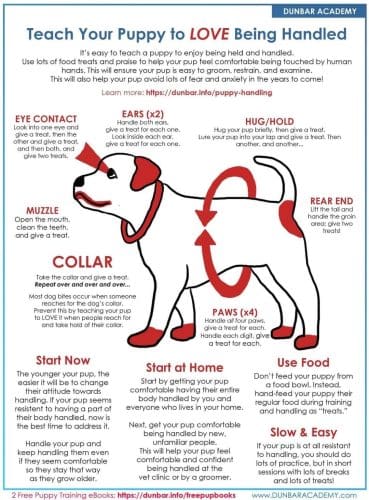
Step 2: Focus on the Five Key Handling Zones
Your dog touch desensitization plan should gradually build comfort in the same areas professionals will handle most often:
- Paws – Begin by gently stroking each paw, rewarding calm acceptance. Slowly progress to lifting a paw and touching between the toes. When your dog can comfortably let you hold a paw, introduce your nail trimming desensitization training. Show the clippers or grinder first, reward curiosity, and stop before discomfort. Over time, the sight and sound of grooming tools will signal good things, not fear.
- Ears – Touch the outer ear gently, offer a treat, and repeat several times. Eventually, move to light touches just inside the ear flap. This helps dogs accept ear exams and cleanings without stress.
- Mouth – Lift the lips gently while rewarding your dog for staying relaxed. This step prevents resistance during dental checks or brushing.
- Back Legs & Rear Area – Many dogs dislike handling near their back end. Reward them for staying calm as you touch their thighs or lift a leg slightly. This helps prepare them for both grooming and veterinary care.
- Tail – Run your hand gently from the base to the tip, rewarding calm behavior. This helps desensitize dogs to necessary vet or grooming procedures near the tail.
Step 3: Pair Touch with Cooperative Care
Incorporate cooperative care training by giving your dog choices. Allow them to move away when unsure and return when ready. Cooperative care builds trust because your dog learns their consent matters. Over time, dogs that feel safe become eager participants, they offer paws, hold still for nail trims, and even lean into gentle brushing.
This process is especially valuable for puppies. Early puppy handling and puppy touch training teach lifelong comfort with human contact. With gentle, positive exposure, your puppy grows into an adult who sees touch as communication, not conflict.
Step 4: Dog Handling Exercises Require Practice, Consistency, and Patience
Repeat these exercises a few times each week in different settings such as the living room, backyard, or during TV time. Keep sessions short (just a few minutes) and always end on a success. Over time, your dog will associate every type of handling with calm, predictable routines.
💬 Remember: Cooperative care isn’t just about tolerance. It’s about partnership. You’re teaching your dog that they have a voice, that touch feels safe, and that you’ll always respect their boundaries.
Step 5: Counter-Conditioning Sensitive Areas
Once your dog is relaxed with gentle handling, you can start layering counter-conditioning, the process of pairing something your dog finds uncomfortable with something they love, to assist in areas they are not as comfortable with. This is where dog touch desensitization turns into real confidence-building.
Begin by touching an area briefly, then reward with a high-value treat. Gradually increase how long you touch, always keeping your dog below their stress threshold. If your puppy or adult dog pulls away, stop immediately and reset. Every repetition should end with success, not struggle.
💬 Remember: Physical force isn’t training. When you stop before discomfort, you build trust and predictability which are the two cornerstones of cooperative care training.
This step is especially important for nail trimming desensitization training. Let your dog sniff the clippers or grinder, reward curiosity, then move away. Repeat until your dog remains calm when the tool appears. Eventually, you’ll touch the tool to the paw without trimming. Reward generously. Only when your dog is consistently relaxed should you begin short, actual trims.
Step 6: Introducing Tools & Cooperative Care
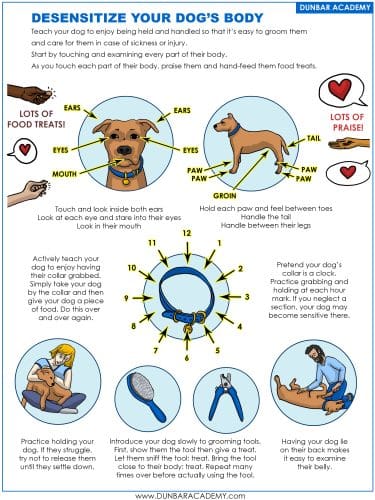
Dogs often fear grooming or vet equipment simply because they’re unfamiliar. Slow, positive introductions make tools part of everyday life.
- Show the tool first. Let your dog sniff the brush, clipper, or nail grinder.
- Reward curiosity. Each time they investigate calmly, offer a treat.
- Pair touch with praise. Briefly touch the tool to their fur or paw, reward, and stop.
- Add movement and sound. Turn on the grinder or clipper away from your dog, feed treats, and gradually bring it closer.
Through these steps, you’re teaching your dog that the presence, and even the sound, of grooming tools means good things are coming. This is the heart of dog cooperative care training and a cornerstone of puppy body sensitivity prevention.
💡 Trainer Tip: Many pet parents find it helpful to schedule short “cooperative care sessions” during quiet times at home. Five minutes of practice a few times a week prevents fear and builds lifelong handling confidence.
Step 7: When to Seek Professional Help
Even with patience, some dogs need extra support. If your dog growls, hides, or panics during handling, don’t push forward alone. A force-free trainer or fear-free groomer can design a personalized cooperative care plan for you.
Look for professionals who emphasize consent-based training and use reward-based techniques. They can help you implement structured nail trimming desensitization training or vet-visit preparation safely. Professional guidance can make a world of difference, especially for rescues, fearful dogs, or puppies who missed early handling experiences.
Step 8: Final Thoughts & Call to Action
Touch desensitization is more than a grooming skill, it’s a language of trust. By pairing gentle handling with positive reinforcement, you create a dog who enjoys being touched and feels safe in your care. Whether you’re practicing puppy handling training or working through cooperative care with an adult dog, your consistency and compassion make every difference.
If you’re ready to learn hands-on techniques or need support with nail trimming desensitization training, our Glendale team can help your dog build confidence step by step.
Dog touch desensitization is the gradual process of helping dogs feel comfortable being handled. Through gentle, reward-based exercises, dogs learn that human touch predicts good things — making vet visits, grooming, and nail trimming stress-free.
Nail trimming desensitization training uses the same force-free methods to teach dogs that paw handling and nail tools are safe. Over time, dogs remain calm for trims and even offer their paws willingly during cooperative care sessions.
Start as soon as you bring your puppy home. Early puppy handling builds positive associations with touch, helping prevent fear responses later in life. Short, positive sessions create lifelong comfort with being examined, brushed, or groomed.
Cooperative care means giving your dog a say in their handling. Dogs are encouraged to participate willingly, not restrained or forced. This reduces stress, improves vet and grooming visits, and strengthens the bond of trust between you and your pet.
If your dog shows fear, tension, or aggression during touch exercises, contact a force-free trainer or fear-free groomer. A professional can create a customized plan that safely supports your dog’s comfort and confidence.