
Arizona heat can turn a normal dog walk into a safety risk fast. While dogs still need potty breaks, exercise, and enrichment, summer in Glendale and the Phoenix West Valley changes what safe dog walking looks like.
So, how hot is too hot to walk your dog? In Arizona, the answer depends on more than the air temperature. Pavement temperature, shade, humidity, time of day, your dog’s age, breed, health, and activity level all matter.
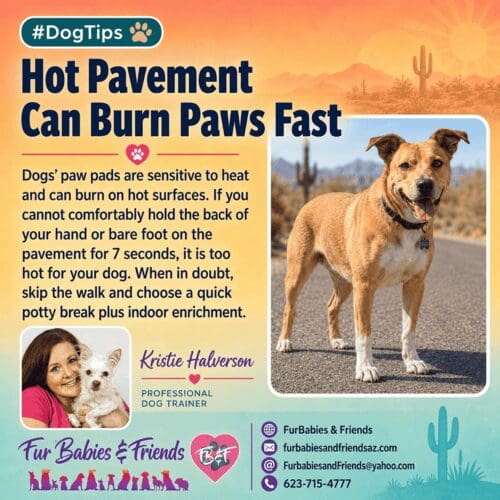
As a general rule, if you cannot comfortably hold the back of your hand or bare foot on the pavement for 7 seconds, it is too hot for your dog to walk on that surface. Maricopa County uses this same pavement test in its pet heat safety guidance and warns that asphalt can become hot enough to cause skin damage quickly.
At FurBabies & Friends, we care for dogs throughout Glendale and the Phoenix West Valley. During Arizona summers, we do not treat every scheduled “walk” as a full outdoor walk. Instead, safety comes first. That may mean a quick potty break, fresh water, indoor enrichment, training games, tug, sniff games, or calm companionship until outdoor conditions are safer.
This guide explains when it is too hot to walk your dog, how to test pavement, what signs of overheating to watch for, when dog booties may help, and how professional dog walkers adjust summer visits to keep pets safe.
Quick Answer: When Is It Too Hot to Walk Your Dog?
| Arizona Condition | Safer Choice |
|---|---|
| Early morning or late evening with cooler pavement | Best time for a longer walk |
| Pavement fails the 7 second hand test | Skip the walk or move to grass or shade |
| Midday triple digit heat | Quick potty break only, then indoor enrichment |
| Dog is panting heavily, slowing down, or seeking shade | Stop activity, move indoors, cool water |
| Puppy, senior dog, flat faced dog, dogs in less than ideal body condition, or high energy dog | Use extra caution and shorten outdoor time |
| No grass, shade, or cool walking surface available | Choose potty only, booties for brief necessary trips, or indoor activity |
| Car ride or quick trip to the vet or groomer | Protect paws during short pavement crossings, but avoid unnecessary outdoor exposure |
The most important thing to remember is this: a safe summer visit does not always mean a full walk. In extreme heat, the safer choice may be a brief potty break followed by indoor activity. Dogs can still receive care, attention, and enrichment without being pushed through dangerous conditions.
Next, let’s look at why Arizona heat is especially risky for dogs.
Why Arizona Heat Makes Dog Walking Riskier
Dogs do not cool themselves the same way people do. Humans sweat across much of the body. Dogs rely mostly on panting, with only limited sweating through their paw pads. Because of this, dogs can overheat faster than many pet parents realize.
Arizona adds another layer of risk. The air temperature may already be extreme, but pavement, asphalt, artificial turf, gravel, and concrete can become even hotter. In direct sun, walking surfaces can hold and radiate heat long after the temperature first climbs.
That matters because dogs are close to the ground. Their paws touch the surface directly, and their bodies absorb reflected heat from the pavement. Therefore, a walk that feels uncomfortable to a person can become dangerous for a dog much faster.
The City of Phoenix also recognizes the danger of extreme heat for dogs. Dogs are prohibited on all City of Phoenix hiking trails when temperatures reach 100 degrees or warmer. That rule is a strong reminder that Arizona heat should not be treated like normal summer weather.
How to Tell If Pavement Is Too Hot for Your Dog
The easiest way to check pavement safety is the 7 second pavement test.
Place the back of your hand or your bare foot on the pavement. If you cannot comfortably hold it there for 7 seconds, it is too hot for your dog to walk on safely.
This test works because your hand or bare foot gives you a better sense of what your dog’s paw pads may feel. If the surface feels painfully hot to you, it is not fair or safe to ask your dog to walk on it.
Hot walking surfaces may include:
- asphalt roads
- sidewalks
- concrete patios
- artificial turf
- gravel
- pool decking
- parking lots
- dark outdoor flooring
In Arizona, pavement can become unsafe even when the air temperature does not seem extreme yet. For that reason, the pavement test matters more than guessing based on the weather app alone.
What Temperature Is Too Hot to Walk a Dog in Arizona?
There is no single perfect temperature that applies to every dog. However, in Arizona, pet parents should become much more cautious as temperatures climb into the upper 80s, 90s, and triple digits.
For many dogs, especially during direct sun or midday heat, the risk increases quickly when pavement becomes hot, shade is limited, or the dog cannot cool down easily.
A short early morning walk may be reasonable on a warm day if the pavement is cool and your dog is comfortable. However, a midday walk at the same temperature may be unsafe because pavement and direct sun exposure are much more intense.
Use these factors before deciding whether to walk:
- Can the pavement pass the 7 second test?
- Is there shade along the route?
- Is your dog already panting before the walk starts?
- Is your dog young, senior, not an a ideal weight, flat faced, double coated, or medically fragile?
- Is the walk necessary, or would a potty break be safer?
- Can you provide indoor enrichment instead?
When in doubt, skip the full walk. A quick potty break and indoor activity are safer than pushing through dangerous heat.
When a Dog Walk Should Become a Quick Potty Break
During Arizona summers, a dog walk should not automatically mean a full walk outside. Sometimes the safest choice is a quick potty break followed by indoor enrichment.
At FurBabies & Friends, we adjust professional pet sitting visits and dog walking visits based on the conditions we see when we arrive. If the pavement is too hot, the dog is already panting heavily, shade is limited, or the temperature is unsafe, we shorten outdoor time and focus on safety first.
A summer “walk” may become:
- a quick potty break at arrival
- a return indoors for water and cool air
- indoor play or training games
- tug, sniff games, or food puzzle enrichment
- calm companionship
- another brief potty opportunity before leaving
This approach still gives dogs attention, movement, and mental stimulation without forcing them through dangerous heat.
Backyards can also be useful, but only when they are truly safe. Shade, surface temperature, supervision, and access to fresh water all matter. Artificial turf, gravel, pool decking, and concrete can become extremely hot, even inside a fenced yard. Therefore, we check the surface before assuming a backyard is safer than a sidewalk.
Safety should always come before routine. A dog will not benefit from a full walk if the heat puts them at risk.
Safe Alternatives to Midday Dog Walks
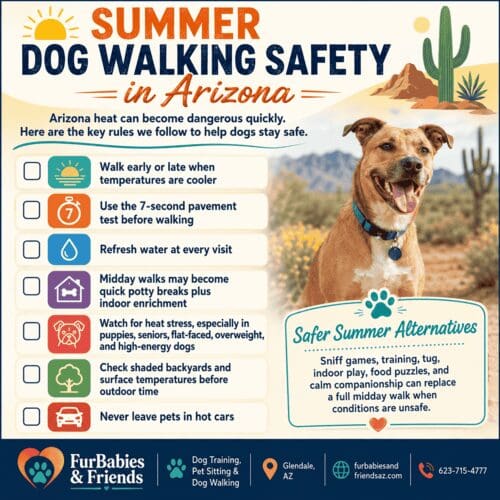
Dogs still need enrichment during summer. However, enrichment does not always have to come from a long outdoor walk.
When Arizona heat makes walking unsafe, indoor activities can help meet a dog’s mental and physical needs without the same heat risk.
Safe summer alternatives may include:
- sniff games
- treat searches
- basic obedience practice
- short trick training sessions
- tug
- food puzzles
- frozen enrichment toys
- calm brushing or handling practice
- quiet companionship
- brief shaded potty breaks
Sniff games are especially useful because they encourage dogs to use their brain and nose. A few minutes of scent work or treat searching can be more mentally satisfying than a rushed walk on hot pavement.
Training games are another strong option. Practicing cues such as sit, down, touch, wait, place, or leash manners indoors gives dogs structure and attention while keeping them out of dangerous heat.
This matters because dogs need more than physical exercise, which is why our dog walking services focus on safety, enrichment, and individualized care. They also need engagement, routine, and connection. During extreme heat, the goal is not to “skip care.” The goal is to provide care in a safer way.
What Dogs Are Most at Risk in Arizona Heat?
Any dog can overheat in Arizona. However, some dogs need extra caution during hot weather.
Dogs at higher risk may include:
- puppies
- senior dogs
- flat faced breeds
- over or under weight dogs
- double coated dogs
- dogs with heart or breathing conditions
- dogs with dark coats
- high energy dogs that do not self regulate well
- dogs recovering from illness or surgery
Flat faced dogs are especially vulnerable because they often have a harder time breathing efficiently. Since panting is one of the main ways dogs release heat, anything that affects breathing can increase heat risk.
Senior dogs and puppies may also struggle more in extreme temperatures. Senior dogs may have reduced stamina, arthritis, heart concerns, or other medical issues. Puppies may have lots of energy, but they do not always know when to stop.
High energy dogs can also be risky in summer because some will keep playing or pulling even when they are getting too hot. For dogs that struggle to settle, structured dog training and indoor enrichment can help them burn mental energy more safely. These dogs may need more owner guidance, shorter outdoor sessions, and indoor enrichment before they reach the point of overheating.
The safer choice is to plan ahead instead of waiting for a dog to show obvious distress.
Signs Your Dog Is Getting Too Hot
Heat stress can escalate quickly. Because of that, pet parents and dog walkers should watch for early warning signs instead of waiting for a crisis.
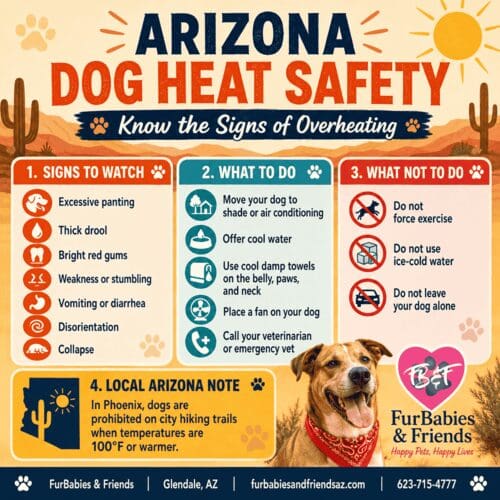
Common signs of overheating may include:
- excessive panting
- thick drool
- bright red gums
- weakness or stumbling
- vomiting or diarrhea
- disorientation
- refusing to move
- collapse
If a dog appears overheated, move them out of the heat immediately. Get them into air conditioning or shade, offer cool water, use cool damp towels on the belly, paws, and neck, and contact a veterinarian or emergency veterinarian. Do not force exercise, do not use ice cold water, and do not leave the dog unattended. Maricopa County and Arizona Humane Society both recommend cooling steps that focus on moving the pet to a cooler place, using cool wet cloths, and seeking veterinary help.
This section is not a replacement for veterinary care. If you suspect heat stroke, treat it as an emergency.
Are Dog Booties Safe for Hot Pavement?
Dog booties can help protect paws from hot pavement in limited situations, but they should not be treated as permission to take a full walk in unsafe heat.
Dogs do not cool themselves the same way humans do. They sweat only a small amount through their paw pads and rely mostly on panting to regulate body temperature. Because of this, a dog wearing booties can still overheat quickly in Arizona summer conditions.
At FurBabies & Friends, we view booties as short term paw protection, not a summer walking solution. They may be helpful for a quick trip into the vet, groomer, apartment potty area, or another unavoidable short crossing over hot pavement.
However, if the pavement is too hot for bare paws, the safer choice is usually to skip the walk, move to grass or shade, or switch to a quick potty break plus indoor enrichment.
Booties protect feet. They do not make the heat safe.
What About Hot Cars and Other Pets?
This post focuses mostly on dog walking, but Arizona heat safety applies to all pets. Dogs, cats, reptiles, birds, rabbits, guinea pigs, and other household pets can all be affected by extreme heat, poor ventilation, dehydration, and failing air conditioning.
Cars are especially dangerous. Even a quick errand can become life threatening when a pet is left inside a vehicle. Maricopa County warns that when the outside temperature reaches 100 degrees, the inside of a car can reach 129 degrees in just 20 minutes.
Even short walks across hot parking lots can also burn paws. This matters for trips to the vet, groomer, apartment potty areas, pet-friendly events, or community spaces where dogs may need to cross pavement before reaching shade or grass.
Other pets also need summer safety checks. During pet sitting visits, a professional pet sitter should confirm pets have fresh water, a safe indoor temperature, functioning habitat equipment, and no obvious signs of distress. For reptiles, fish, birds, and small mammals, temperature control and equipment checks can be just as important as food and water.
Arizona heat is not only an outdoor issue. It is also a home safety issue.
How Professional Dog Walkers Adjust During Arizona Summers
A professional dog walker should never follow a routine blindly during extreme heat. Safe summer care requires judgment, communication, and flexibility.
At FurBabies & Friends, our summer dog walking and pet sitting approach includes:
- testing pavement before walks
- shortening outdoor time when needed
- using quick potty breaks instead of full walks during unsafe heat
- choosing shade or grass when available
- monitoring dogs for overheating
- refreshing water bowls at every visit
- checking indoor temperature when clients are away
- communicating concerns quickly
- using indoor enrichment when walking is not safe
This matters because a scheduled visit is not just about exercise. It is about care, safety, and monitoring.
For some dogs, especially dogs who are home while their owners work, a midday visit may still be necessary. However, the purpose may shift from “take a long walk” to “help the dog potty, check their water, give them attention, and keep them safe.”
That is the difference between simply showing up and providing professional pet care.
Need Safe Dog Walking Help in Glendale?
Arizona summers require a different approach to dog walking. Long midday walks may not be safe, but dogs still need potty breaks, fresh water, enrichment, companionship, and someone paying attention to their comfort.
FurBabies & Friends background checked, bonded and insured team provides professional dog walking and pet sitting services throughout Glendale and the Phoenix West Valley. Our team adjusts visits based on the weather, pavement temperature, your dog’s needs, and the safest option available that day.
Whether your dog needs regular weekday visits, vacation pet sitting, or summer potty breaks while you are at work, we help create a care plan that keeps safety first.
Schedule your complimentary pet sitting or dog walking meet and greet today.
Frequently Asked Questions About Walking Dogs in Arizona Heat
There is no single temperature that is safe for every dog. In Arizona, pet parents should use extra caution as temperatures climb into the upper 80s, 90s, and triple digits. Pavement temperature, shade, time of day, and your dog’s age, breed, weight, and health all matter.
If the pavement does not pass the 7 second hand or bare foot test, it is too hot for your dog to walk on that surface.
Use the 7 second pavement test. Place the back of your hand or your bare foot on the pavement. If you cannot comfortably hold it there for 7 seconds, it is too hot for your dog’s paws.
Check asphalt, concrete, artificial turf, gravel, patios, and parking lots. These surfaces can become dangerously hot in Arizona sun.
Yes. Dogs can burn their paw pads on hot pavement, asphalt, concrete, artificial turf, gravel, and other heated surfaces. Paw burns can happen quickly when surfaces are hot enough.
Because of this, it is safer to walk early in the morning or later in the evening when pavement has cooled.
Dog booties can help protect paws during short, necessary trips across hot pavement. However, they should not be treated as permission to take a full walk in unsafe heat.
Dogs rely mostly on panting to cool themselves and only sweat a small amount through their paw pads. Booties may protect feet, but they do not prevent overheating. If pavement is hot enough that your dog needs boots, it is usually too hot for a normal walk.
If midday heat makes walking unsafe, switch to a quick potty break followed by indoor enrichment. Good options include sniff games, treat searches, tug, training games, food puzzles, frozen enrichment toys, or calm companionship.
The goal is not to skip care. The goal is to meet your dog’s needs in a safer way.
Warning signs may include excessive panting, thick drool, bright red gums, weakness, stumbling, vomiting, diarrhea, disorientation, refusing to move, collapse, or seizures.
If you suspect overheating, move your dog into shade or air conditioning immediately, offer cool water, use cool damp towels, and contact your veterinarian or an emergency vet.
Yes, but safe professional dog walkers adjust based on conditions. In Arizona, a summer dog walking visit may include a quick potty break, fresh water, indoor play, training games, enrichment, or companionship instead of a full outdoor walk.
A responsible dog walker should prioritize the dog’s safety over completing a normal walking route.
Yes. Cats, rabbits, guinea pigs, birds, reptiles, fish, and other pets can also be affected by heat, dehydration, poor ventilation, and equipment failures. During summer pet sitting visits, it is important to check water, indoor temperature, habitat equipment, and signs of distress.
About the Author
Kristie Halverson is the owner and trainer at FurBabies & Friends, a force-free, positive reinforcement pet service company based in Glendale, AZ. She provides dog training, pet sitting, dog walking, grooming, and enrichment focused care throughout Glendale and the Phoenix West Valley.
Kristie is a member of the Pet Professional Guild, APDT, IAABC, IACP, and PSI. She is also an approved AKC CGC and STAR Puppy Evaluator. Her work focuses on safe, humane, relationship based care for dogs, cats, and other pets.
Follow FurBabies & Friends on TikTok, Instagram, Facebook, and YouTube at @furbabiesandfriendsaz for training tips, pet care education, and local event updates.
March is recognized as Pet Poison Prevention Month, making it a perfect time for pet owners to review common household toxins and emergency preparedness. From common foods and medications to cleaning products and landscaping plants, toxic substances can be found in places most pet owners would never expect.
Pet poison prevention starts with awareness. Curious pets often explore their environment with their mouths. Meaning, substances that seem harmless to humans can quickly become serious health risks for dogs, cats, and other household pets. According to veterinary poison control experts, exposures to common household toxins occur thousands of times each year across the United States.
In this guide, we will walk through some of the most common household toxins for pets, including dangerous foods, medications, plants, and hidden hazards that can lead to poisoning. We will also cover Arizona specific risks, emergency steps every pet owner should know, and simple strategies to help protect your pets from accidental exposure.
For pet owners in the Phoenix and Glendale area, understanding these risks is especially important. Desert landscaping plants and local wildlife can introduce additional poisoning hazards. At FurBabies & Friends, safety and preparedness are central to the professional pet care we provide. Recognizing potential toxins and responding quickly if a pet becomes ill is what separates trained pet sitters from friends or neighbors.
🚨 Pet Poison Emergency Numbers
ASPCA Animal Poison Control Center
888-426-4435
Pet Poison Helpline
855-764-7661
What Should You Do If Your Pet Eats Something Poisonous?
- Remove your pet from the toxin immediately. Prevent further exposure and secure the substance if possible.
- Call a veterinarian or pet poison hotline right away. Quick guidance is critical during poisoning emergencies.
- Do not induce vomiting unless instructed by a professional. Some toxins cause more damage if vomiting occurs.
- Collect helpful information. Bring the packaging, ingredient list, or a photo of the substance.
- Monitor your pet closely for symptoms. Watch for vomiting, tremors, drooling, weakness, or seizures.
- Transport your pet to a veterinarian if advised. Early treatment can significantly improve outcomes.
Why Pet Poison Prevention Matters
Pet poison prevention plays a critical role in responsible pet ownership. Every year, thousands of pets suffer accidental poisoning inside their own homes. According to the ASPCA Animal Poison Control Center, poison exposure cases occur hundreds of thousands of times each year. Many of these incidents involve everyday household items.
Pets often encounter toxic substances while exploring their environment. Dogs may counter surf, chew objects, or eat dropped food. Cats may groom residue from chemicals or plants on their fur.
The Pet Poison Helpline reports that human medications remain the most common poisoning source for pets. Foods, cleaning products, and toxic plants also cause frequent emergencies.
Even small amounts of certain toxins can cause severe illness. Xylitol can cause rapid blood sugar drops in dogs. Sago palm can lead to liver failure. Some medications damage the kidneys or nervous system. Fortunately, many poisoning incidents are preventable. Pet owners who understand common toxins can reduce risk at home. Preparation also matters. Knowing emergency resources and recognizing symptoms can help pet owners act quickly.
Common Household Toxins That Can Poison Pets
What are the most common household toxins for pets?
Common household toxins for pets include certain foods, medications, cleaning products, plants, and chemicals. Dogs, cats, and other pets may encounter these substances during normal daily activities inside the home.
Many poisoning incidents happen when pets ingest food scraps, chew household items, or access medications left within reach. Even products used for routine cleaning or pest control can pose risks. Understanding which substances are dangerous helps pet owners reduce accidental exposure. The most common toxin categories include toxic foods, human medications, and household chemicals.
Many foods that are safe for people can be extremely dangerous for dogs. The infographic below highlights several of the most common food poisoning risks found in everyday homes.

Human Medications That Are Toxic to Pets
Human medications are one of the most common causes of pet poisoning. Many drugs that help people can cause serious illness in animals. Both the ASPCA Animal Poison Control Center and Pet Poison Helpline report that human medications remain one of the leading causes of pet poisoning emergencies.
Pets often ingest medications accidentally. A dropped pill, open purse, or unsecured bottle can quickly become dangerous. Dogs may chew containers or eat pills that fall on the floor. Cats may ingest medications through residue on surfaces or accidental exposure.
Veterinarians frequently warn pet owners about several medications that cause serious poisoning risks due to the high volume of emergency pet poisoning incidents.
Common medications that are toxic to dogs include:
- ibuprofen
- acetaminophen
- naproxen
- vitamin D3 supplements
- amphetamines
- caffeine pills
- antidepressants such as bupropion and venlafaxine
- albuterol inhalers
- blood pressure medications such as metoprolol
Cats are particularly sensitive to several medications, including:
- acetaminophen
- amphetamines
- ibuprofen
- venlafaxine
- duloxetine
- aspirin
- hydrochlorothiazide
- pregabalin
Even small amounts of these medications can cause severe health problems. Symptoms may include vomiting, tremors, organ damage, or neurological issues. Pet owners should always store medications in secure cabinets or containers. Never leave pills or pill bottles where pets can reach them.
Household Chemicals and Cleaning Products
Several common cleaning products can pose poisoning risks for pets. Dogs and cats often encounter these chemicals inside the home during normal daily activity. The Pet Poison Helpline reports common household cleaners and chemicals are among the frequently reported poisoning hazards affecting pets.
Products designed for cleaning or disinfecting often contain ingredients that irritate the digestive system, skin, or respiratory tract. Pets may encounter these chemicals by licking surfaces, chewing containers, or drinking contaminated water.
Common household chemical hazards include:
• bleach
• toilet bowl cleaners
• disinfectant sprays
• drain cleaners
• antifreeze
• rodenticides and pest control products
Cats face a higher risk from some cleaning products. After walking across treated surfaces, they may ingest toxins while grooming their paws or fur.
Pet owners should always keep cleaning supplies secured in cabinets. Allow treated surfaces to dry fully before allowing pets back into the area. Proper storage and careful cleaning routines can significantly reduce the risk of accidental exposure.
Hidden Household Hazards Many Pet Owners Overlook
Not all pet poisoning risks come from obvious sources like food or medications. Some household items can become dangerous simply because pets chew, lick, or swallow them during normal exploration.
Small objects can cause poisoning, chemical exposure, or serious internal injuries.
Button batteries are a major hidden hazard. These small batteries are found in watches, key fobs, toys, and remote controls. If swallowed, they can cause severe burns inside the digestive tract.
Essential oils and diffusers can also pose risks for pets. Some oils may irritate the skin or cause illness if ingested. Pets may also inhale concentrated vapors from diffusers placed at floor level causing respiratory distress. Cats are particularly sensitive because their liver lacks certain enzymes needed to break down compounds found in essential oils.
Essential oils known to be toxic or potentially toxic to pets include:
• tea tree oil (melaleuca)
• eucalyptus
• peppermint
• cinnamon
• citrus oils
• clove
• wintergreen
• pine
• ylang ylang
• pennyroyal
Exposure to these oils may cause symptoms such as drooling, vomiting, tremors, weakness, or difficulty breathing. Pet owners should use essential oils cautiously around animals. Keep oils stored securely and avoid applying them directly to pets unless directed by a veterinarian.
Glow sticks and glow jewelry contain chemicals that can cause drooling, mouth irritation, and stomach upset if chewed.
Rubber bands, dental floss, and string may seem harmless but can cause serious intestinal blockages if swallowed.
Even mop buckets or toilet water containing cleaning chemicals can expose pets to toxins if they drink from them.
Pet owners should keep small objects secured and store household products safely. Monitoring pets during play and exploration can help prevent accidental exposure to these hidden hazards.
Arizona Specific Poison Hazards for Pets
Pet owners in Arizona face additional poisoning risks that may not appear in other parts of the country. Desert landscaping plants and native wildlife can introduce hazards that many new pet owners do not expect. Several plants commonly used in Arizona landscaping are highly toxic to dogs and cats. Certain desert animals can also expose pets to dangerous toxins. Understanding these regional risks helps pet owners prevent emergencies and recognize symptoms quickly.
Sago Palm
The sago palm is extremely toxic to dogs and is responsible for many serious poisoning cases each year.
Despite its name, it is not a true palm. It belongs to a group of plants called cycads. This plant is commonly used in landscaping and decorative pots throughout Arizona.

All parts of the sago palm are toxic. The seeds contain the highest concentration of toxins. Even small amounts can cause severe poisoning in dogs. In fact, the sago palm is one of the most dangerous plants for dogs. Poisoning symptoms may include vomiting, lethargy, seizures, and liver failure.
According to the ASPCA Animal Poison Control Center, sago palm ingestion can lead to life-threatening liver damage in pets. Pet owners should remove sago palms from areas accessible to pets whenever possible.
Oleander
While beautiful, the oleander is another toxic plant commonly found in Arizona landscaping. The plant produces attractive flowers but contains powerful cardiac toxins. Dogs and cats may become ill after chewing leaves, flowers, or stems.
Symptoms of oleander poisoning may include drooling, vomiting, abnormal heart rhythms, and weakness. Because this plant is widely used in landscaping across Arizona, pet owners should monitor pets closely when walking near planted areas and definitely remove any in the yard.
Sonoran Desert Toad
The Sonoran Desert toad, also called the Colorado River toad, presents another serious risk for pets in Arizona. These large toads release toxins through glands on their skin when threatened.
Dogs often encounter these toads during evening or nighttime outdoor activity. When a dog mouths the toad, toxins can absorb quickly through the gums. Symptoms may include drooling, shaking, seizures, and difficulty breathing. Immediate veterinary care is critical if exposure occurs.
Pet owners should supervise pets outdoors during warm evenings when these toads are most active.
What To Do During a Pet Poisoning Emergency
Pet poisoning emergencies can happen quickly. Acting fast can make a critical difference in your pet’s outcome.
Common signs of poisoning may include vomiting, drooling, tremors, weakness, seizures, or difficulty breathing. Some pets may also show sudden lethargy or loss of coordination. If you suspect your pet has ingested something toxic, contact a veterinarian immediately. Do not wait for symptoms to worsen before seeking help.
Pet owners can also contact the ASPCA Animal Poison Control Center or the Pet Poison Helpline for emergency guidance.
ASPCA Animal Poison Control Center
888-426-4435
Pet Poison Helpline
855-764-7661
These services provide 24-hour assistance from veterinary toxicology experts. If possible, gather helpful information before calling. This may include the product name, ingredients, packaging, or an estimate of how much your pet may have ingested.
Pet owners should never induce vomiting or give medications without veterinary guidance. Some substances can cause additional damage if vomiting occurs. Quick action and professional guidance give pets the best chance for a safe recovery.
Can Activated Charcoal Help During a Pet Poisoning Incident?
Activated charcoal is sometimes used in veterinary medicine to help limit toxin absorption after a pet ingests something harmful. Activated charcoal works by binding to certain toxins in the stomach and intestines. This process can slow or reduce the amount of poison that enters the bloodstream.
Veterinarians commonly use activated charcoal in clinical settings after confirmed toxin ingestion. However, it is not appropriate for every poisoning situation.
Some toxins do not bind well to charcoal. In other cases, giving charcoal may worsen the situation, especially if a pet is vomiting, having seizures, or struggling to swallow safely.
Because of these risks, pet owners should never administer activated charcoal without veterinary guidance. If a veterinarian or pet poison hotline recommends charcoal, it may help buy valuable time while your pet receives proper medical care.
For households with pets, it can be helpful to know where activated charcoal products are available. However, the safest approach is always to contact a veterinarian or pet poison expert first before giving any treatment at home. Quick guidance from a professional ensures the right treatment is used for the specific toxin involved.
How Professional Pet Sitters Prepare for Pet Emergencies
Experienced pet care professionals plan for emergencies before they ever happen.
At FurBabies & Friends, we take several steps to ensure pets receive fast medical care if something unexpected occurs. One of the most important safeguards is a veterinary authorization form. Many veterinary clinics cannot treat a pet without owner approval. This can delay care if a sitter, neighbor, or friend brings a pet in during an emergency.
Before services begin, our clients complete a veterinary release form that allows our team to authorize treatment if necessary. This ensures a veterinarian can act quickly if a poisoning or medical emergency occurs.
We also collect detailed information about each pet, including:
• primary veterinarian contact information
• preferred emergency veterinary clinic
• known allergies or medical conditions
• medications and dosing instructions
This preparation allows our team to respond quickly if a pet becomes sick or is exposed to a toxin.
Professional pet sitters are also trained to recognize early warning signs of poisoning. Subtle symptoms such as excessive drooling, unusual lethargy, vomiting, or sudden behavioral changes can signal that something is wrong. When pet care providers are prepared and informed, pets receive faster care and better outcomes.
How to Pet Proof Your Home to Prevent Poisoning
Preventing poisoning starts with making your home safer for curious pets. Many toxin exposures happen when pets explore everyday household items left within reach.
A few simple habits can greatly reduce these risks.
Store Medications Securely
Human medications are one of the most common causes of pet poisoning. Even a single pill can cause serious harm to dogs and cats. Always store medications in closed cabinets or containers. Avoid leaving pills on counters, bedside tables, or in purses where pets may investigate.
Keep Toxic Foods Out of Reach
Foods such as chocolate, grapes, raisins, xylitol sweeteners, onions, and alcohol can be dangerous for pets. Store food securely and remind family members and guests not to share table scraps with pets.
Be Careful With Household Chemicals
Cleaning products, automotive fluids, and pest control products can all pose risks to pets. Keep these products locked away or stored in cabinets that pets cannot access. When using cleaners, allow surfaces to fully dry before pets return to the area.
Use Essential Oils Carefully
Some essential oils can be toxic to pets, especially cats. Oils such as tea tree, eucalyptus, peppermint, clove, cinnamon, and wintergreen can cause poisoning if ingested or heavily diffused.
If you use essential oils at home, research pet-safe options and avoid applying oils directly to pets unless directed by a veterinarian.
Know the Plants in Your Yard
Many popular plants can be toxic to pets. In Arizona landscapes, plants like sago palm and oleander pose serious risks. Before adding new plants to your yard or home, check whether they are safe for pets.
Protecting Pets Starts With Awareness and Preparation
Pet poisoning is one of the most common emergency situations veterinarians see each year. The good news is that many of these incidents are preventable. Understanding common toxins, storing hazardous items safely, and recognizing early warning signs can significantly reduce the risk of poisoning.
Pet owners should also keep important emergency numbers readily available and contact a veterinarian immediately if exposure is suspected. Acting quickly can make a critical difference in your pet’s recovery.
For households with busy schedules or travel plans, professional pet care adds another layer of protection. Experienced pet sitters know how to identify potential hazards and recognize early symptoms of poisoning.
At FurBabies & Friends, we prioritize pet safety by gathering emergency veterinary information, maintaining veterinary authorization forms, and closely monitoring pets during each visit. These precautions allow our team to act quickly if a health emergency ever occurs.
When pet owners stay informed and prepared, they can create a safer environment where their pets can thrive.
Frequently Asked Questions About Pet Poison Prevention
The most common causes of pet poisoning include human medications, toxic foods, household cleaning products, pesticides, toxic plants, and certain essential oils.
According to the ASPCA Animal Poison Control Center, human medications are one of the leading sources of pet poisoning incidents each year. Even small doses can cause serious health problems for dogs and cats.
Keeping medications, chemicals, and toxic foods stored securely can greatly reduce these risks.
If you believe your pet has ingested something toxic, contact a veterinarian immediately.
Pet owners can also call the ASPCA Animal Poison Control Center at 888-426-4435 or the Pet Poison Helpline at 855-764-7661 for emergency guidance.
Avoid inducing vomiting or giving home treatments unless a veterinary professional specifically instructs you to do so. Quick action gives pets the best chance of recovery.
Symptoms of poisoning can appear within minutes or may take several hours depending on the toxin involved.
Common warning signs include vomiting, excessive drooling, tremors, weakness, seizures, loss of coordination, and unusual lethargy. Any sudden or unexplained symptoms should be treated as a potential medical emergency.
Some essential oils can be harmful to pets, especially cats. Oils such as tea tree, eucalyptus, peppermint, wintergreen, cinnamon, clove, and pine can cause poisoning if ingested or heavily diffused in enclosed spaces.
Pet owners should research pet-safe products and avoid applying essential oils directly to pets unless directed by a veterinarian.
Several common landscaping plants in Arizona are toxic to pets. Two of the most dangerous include sago palm and oleander. Even small amounts of these plants can cause severe illness. Sago palm ingestion can lead to liver failure in dogs and cats.
Pet owners should research plants carefully before adding them to their yard or home.
Professional pet sitters often use veterinary authorization forms that allow them to seek medical care if a pet becomes sick or injured while the owner is away. Without this authorization, many veterinary clinics cannot legally treat a pet brought in by someone other than the owner.
This is one reason many pet owners choose experienced pet care providers who prepare for emergencies in advance.
Follow along on TikTok, Instagram and Facebook @furbabiesandfriendsaz for upcoming walks, events, and training tips.